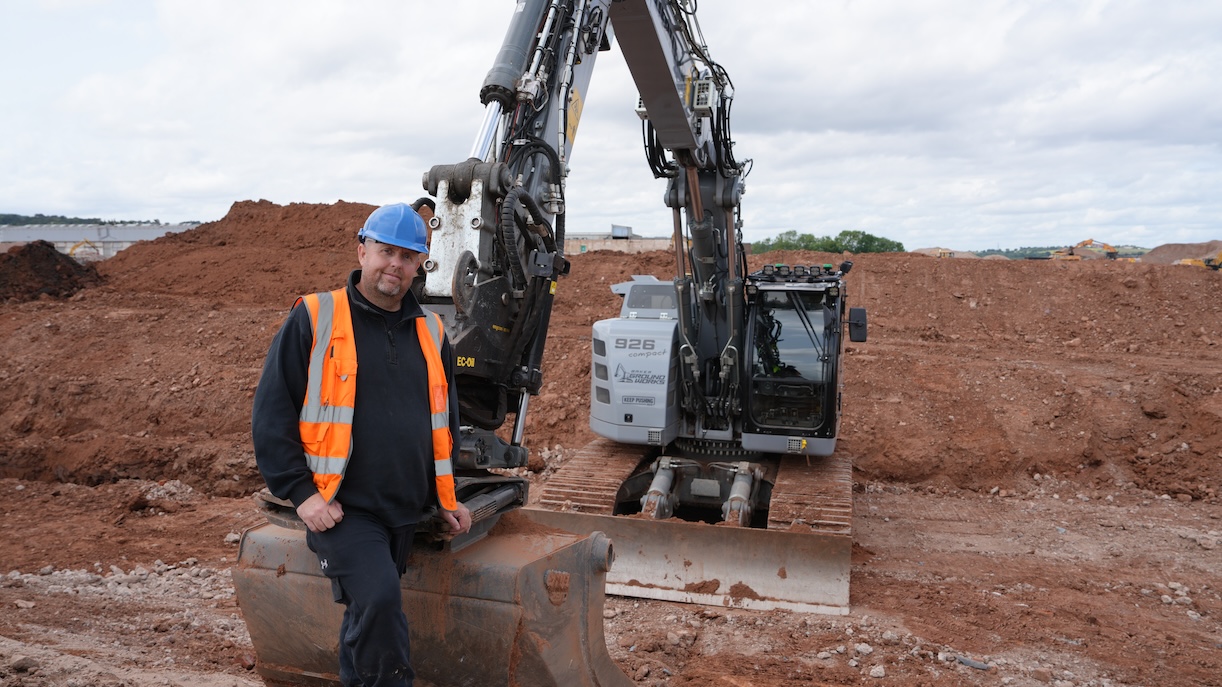
Jim Rolland of Balfour Beatty on the Leica Geosystems TS20 Total Station

“What we’re seeing here isn’t just a new Leica Geosystems Total Station, it’s a connected system.”

At the launch of the new TS20, Peter Haddock caught up with Jim Rolland, Head of Engineering Surveying at Balfour Beatty, who shared his insights on how the new Total Station represents more than just another hardware upgrade

Jim: “The TS20 is a fundamental shift in how surveyors connect, collaborate, and deliver. This is about changing how we work.

“We’ve had instruments before that could move bits of data around, but this is completely different. The workflow potential is massive.”

The TS20 integrates AI capabilities, embedded SIM connectivity, and intelligent algorithms that adapt to real world conditions, which is a big change as Jim explained:

“It’s the difference between when we first saw reflectless technology and everything that came before it. This is that same kind of game changing moment.”

Leica’s AI-driven automation not only improves accuracy but also actively prevents common errors, such as selecting the wrong prism type, that can lead to costly rework.

Jim: “30% of what we do in construction is rework, and 80% of accidents happen during that rework. If we can eliminate those errors before they happen, we’re improving productivity, quality, and safety all at once.”

Talking about the IP66 rating and asset protection software, Jim added:

“I’ve worked in tunnels where it’s hot, wet, and dusty conditions that ruin instruments. Having something that can handle that environment, and even lock itself if it’s misplaced or not calibrated, is huge.”

As Balfour Beatty continues to explore AI integration across its operations, including through its collaboration with Microsoft Copilot, this level of connectivity aligns with its roadmap.

“This technology is only the start, the TS20 is built to evolve, and it’s exciting to think where it will go next.”

Other stories you may enjoy...

Update cookies preferences